Resources

Florida Probate Resources, Guides & Checklists

Clear Answers and Practical Tools for Florida Probate

When someone dies, families are often faced with questions they have never had to answer before. Is probate necessary? Where is the Will? What property did my loved one own? What are the assets worth? What am I supposed to do as Personal Representative—and what should I avoid doing?

FLProb8 has developed this library of free Florida probate resources, guides, checklists and tools to help answer those questions and make the next steps a little clearer.

Whether you are dealing with the recent loss of a loved one, trying to determine whether a Florida probate is necessary, or have been appointed to serve as a Personal Representative, start with the situation that most closely matches yours.

All of our resources are free. Choose a resource below to learn more and receive your copy.

Where Should I Start?

I'm overwhelmed and don't know where to begin.

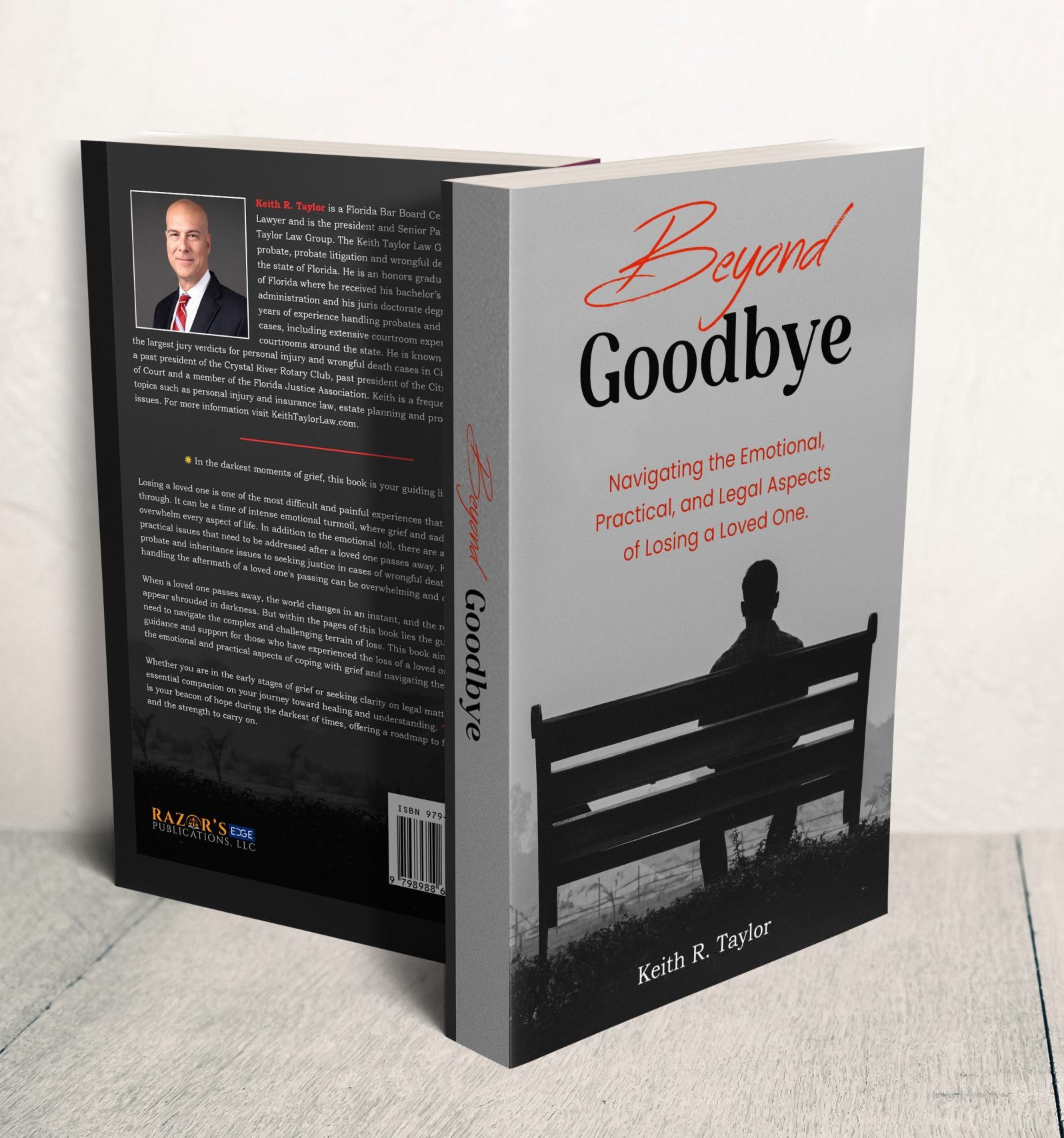
Start with Beyond Goodbye , our comprehensive 143-page book addressing the emotional, practical and legal issues families can face after losing someone they love.

I need to know what I should do right now.

Start with 12 Essential Steps After the Loss of a Loved One for a concise, actionable guide to immediate priorities.

I'm serving as Personal Representative.

Start with the Florida Personal Representative's Checklist , the Florida Personal Representative's Survival Guide , and 10 Things a Florida Personal Representative Should NOT Do.

Getting Started After the Loss of a Loved One

FLProb8 Resource

12 Essential Steps After the Loss of a Loved One

The days immediately following a death can be overwhelming. There are personal matters to address, documents to locate, property to protect and important decisions that may need to be made—often before the family understands whether probate will even be necessary.

12 Essential Steps After the Loss of a Loved One provides an organized starting point. It can help you focus on the things that deserve attention now while avoiding the feeling that everything must be handled at once.

This is an excellent first resource for a surviving spouse, adult child, family member or anyone who expects to have responsibility for settling a loved one's affairs.

Get the 12 Essential Steps

Finding and Understanding Estate Assets

FLProb8 Resource

A Guide to Finding Assets in a Loved One's Estate

You cannot properly administer an estate if you don't know what the deceased person owned. Families do not always have a complete list of a loved one's bank accounts, investments, insurance, real estate, business interests and other property.

Our Guide to Finding Assets in a Loved One's Estate provides a systematic approach to the search.

This resource may be particularly helpful when financial records are incomplete, the deceased handled the family's finances, family members live outside Florida, or you simply aren't sure where to begin looking.

Get the Guide to Finding Assets
FLProb8 Resource

A Guide for Determining the Value of Assets in a Loved One's Estate

Finding an asset is only part of the job. You may also need to determine what the asset was worth.

Asset values can matter when evaluating an estate, determining the appropriate probate procedure and administering the estate. Different kinds of property may require different approaches to valuation.

Our Guide for Determining the Value of Assets in a Loved One's Estate gives families and Personal Representatives a practical starting point for identifying the information they may need.

Get the Asset Valuation Guide

Determining Whether Florida Probate May Be Necessary

FLProb8 Tool

Florida Property Ownership Analyzer

How property is titled can be just as important as what the person owned.

A house, bank account or other asset does not necessarily become a probate asset simply because the deceased had an ownership interest in it. Joint ownership, survivorship rights, beneficiary designations, trusts and other arrangements can affect what happens after death.

The Florida Property Ownership Analyzer is designed to help you examine how property was owned and better understand why ownership matters when determining whether an asset may need to pass through Florida probate.

Use the Florida Property Ownership Analyzer
FLProb8 Guide

Guide to Determining if a Loved One Was a Florida Resident

Where did your loved one legally reside when they died?

The answer may seem obvious, but it isn't always. A person may own homes in multiple states, spend substantial time in Florida, receive mail somewhere else, or have recently moved.

Our Guide to Determining if a Loved One Was a Florida Resident helps identify information that may be relevant when determining the deceased person's Florida residency and where the primary probate proceeding may belong.

This can be especially useful for families of retirees, seasonal Florida residents and people who owned property in more than one state.

Get the Florida Residency Guide
FLProb8 Guide

Florida Probate: Myth vs. Fact

Does having a Will avoid probate? Does everything have to go through probate? Is the process always the same?

Florida probate is surrounded by misconceptions, and acting on one of them can create unnecessary confusion.

Florida Probate: Myth vs. Fact addresses common misunderstandings and helps separate things families frequently hear about probate from how the Florida probate process actually works.

Get Florida Probate: Myth vs. Fact

Finding a Will

FLProb8 Resource

Resources for Finding a Last Will and Testament

You believe your loved one had a Will—but no one can find it.

Locating the original Last Will and Testament can be an important early step in a Florida probate. The deceased may have kept it at home, with an attorney, in a safe-deposit box or somewhere family members would never think to look.

Resources for Finding a Last Will and Testament provides practical places and sources to investigate when a Will is believed to exist but has not yet been located.

Get the Will-Finding Resources

Resources for Florida Personal Representatives

Serving as a Personal Representative involves more than simply following the instructions in a Will. A Florida Personal Representative has responsibilities involving estate property, beneficiaries, creditors, court filings, expenses and ultimately the proper distribution of estate assets.

These resources were created specifically to help Personal Representatives understand and organize that responsibility.

FLProb8 Guide

Florida Personal Representative's Survival Guide

Serving as Personal Representative may be unfamiliar territory, and mistakes can complicate an already difficult process.

The Florida Personal Representative's Survival Guide was developed as a practical resource for people responsible for administering a Florida estate. It helps explain the role, highlights issues that deserve attention and provides guidance for navigating the probate process from appointment toward completion.

Get the Florida Personal Representative's Survival Guide
FLProb8 Guide

10 Things a Florida Personal Representative Should NOT Do

Sometimes knowing what not to do is just as valuable as knowing what to do.

A Personal Representative may have access to estate property and money, but that does not mean those assets can immediately be sold, given away or distributed. Acting too quickly or without understanding the probate process can create problems for the estate and the Personal Representative.

10 Things a Florida Personal Representative Should NOT Do identifies common mistakes and potentially problematic actions to avoid while administering a Florida estate.

Get the 10 Things a Florida Personal Representative Should NOT Do

Understanding Florida Probate

What Is Probate in Florida?

Florida probate is a court-supervised process for administering certain property owned by a person at death. Depending upon the circumstances, the process can involve identifying and protecting estate assets, determining beneficiaries, addressing creditor claims and expenses, transferring property, and ultimately closing the estate.

But not every asset requires probate, and not every estate follows the same probate procedure.

Florida estates may potentially be handled through Formal Administration or Summary Administration, while Ancillary Administration may be necessary when someone who lived outside Florida died owning Florida property.

That is why one of the most important first questions isn't simply:

“How do I open probate?”

It is:

“Do I need a Florida probate at all?”

The answer usually begins with understanding what the person owned, how each asset was titled, whether beneficiaries were designated, where the person resided, and whether Florida real estate is involved.

The resources above were designed to help you start answering those questions.

Common Florida Probate Questions

Do I need probate in Florida if there is a Will?

Possibly. A Will does not, by itself, eliminate the need for probate. Whether probate is necessary generally depends upon the assets the deceased owned and how those assets were titled or designated to pass at death. The Will generally directs the disposition of probate assets rather than automatically transferring those assets without probate.

What assets may avoid Florida probate?

Depending upon how they are owned or designated, assets such as property held with survivorship rights, accounts with valid payable-on-death or transfer-on-death beneficiaries, life insurance or retirement benefits with designated beneficiaries, and property held in certain trusts may pass outside probate.

What if the person lived outside Florida but owned property here?

A Florida probate proceeding may still be necessary. When a non-Florida resident dies owning Florida property requiring probate administration, an ancillary administration may be appropriate.

How do I know which Florida probate procedure applies?

Florida has different probate procedures, and the appropriate one depends upon the circumstances of the estate. Formal Administration and Summary Administration are different processes with different requirements. An attorney can evaluate the estate and determine which procedure is available and appropriate.

What does a Florida Personal Representative do?

A Personal Representative is the person appointed by the probate court to administer an estate in a Formal Administration. Responsibilities can include identifying and protecting assets, providing required notices, dealing with creditors and expenses, maintaining records, making required court filings and ultimately distributing estate property as authorized.

Can I handle a Florida probate if I live outside Florida?

Living outside Florida does not necessarily prevent someone from being involved in a Florida probate or receiving an inheritance. Whether a particular person qualifies to serve as Personal Representative is a separate question under Florida law. Much of the probate process can also be handled without beneficiaries or family members routinely traveling to Florida.

Still Not Sure Where to Start?

You don't have to determine the entire probate process before asking for help.

If someone has died and you are trying to determine whether Florida probate is necessary, what type of probate may be required, or what you should do next, FLProb8 can help you identify the appropriate path.

Start by gathering what you know.

You don't need to have every account number, every asset value or every document before speaking with us. Information about the deceased person, where they lived, whether they owned Florida property, whether there is a Will, and what you currently know about their assets can provide a useful starting point.

Call 1-877-FLPROB8

FLProb8 provides Florida probate information and connects individuals needing Florida probate legal services with Keith Taylor Law Group, P.A. The materials available through this Resource Center are provided for general informational and educational purposes and are not legal advice. Every estate is different. Downloading a resource or submitting information through this website does not create an attorney-client relationship.